SEER Platform Embraces AI Agents: The Future of Smart Building Management
We're excited to announce a major evolution in the SEER platform—our transition to AI-powered agents that will transform how smart buildings are monitored, managed, and optimized.
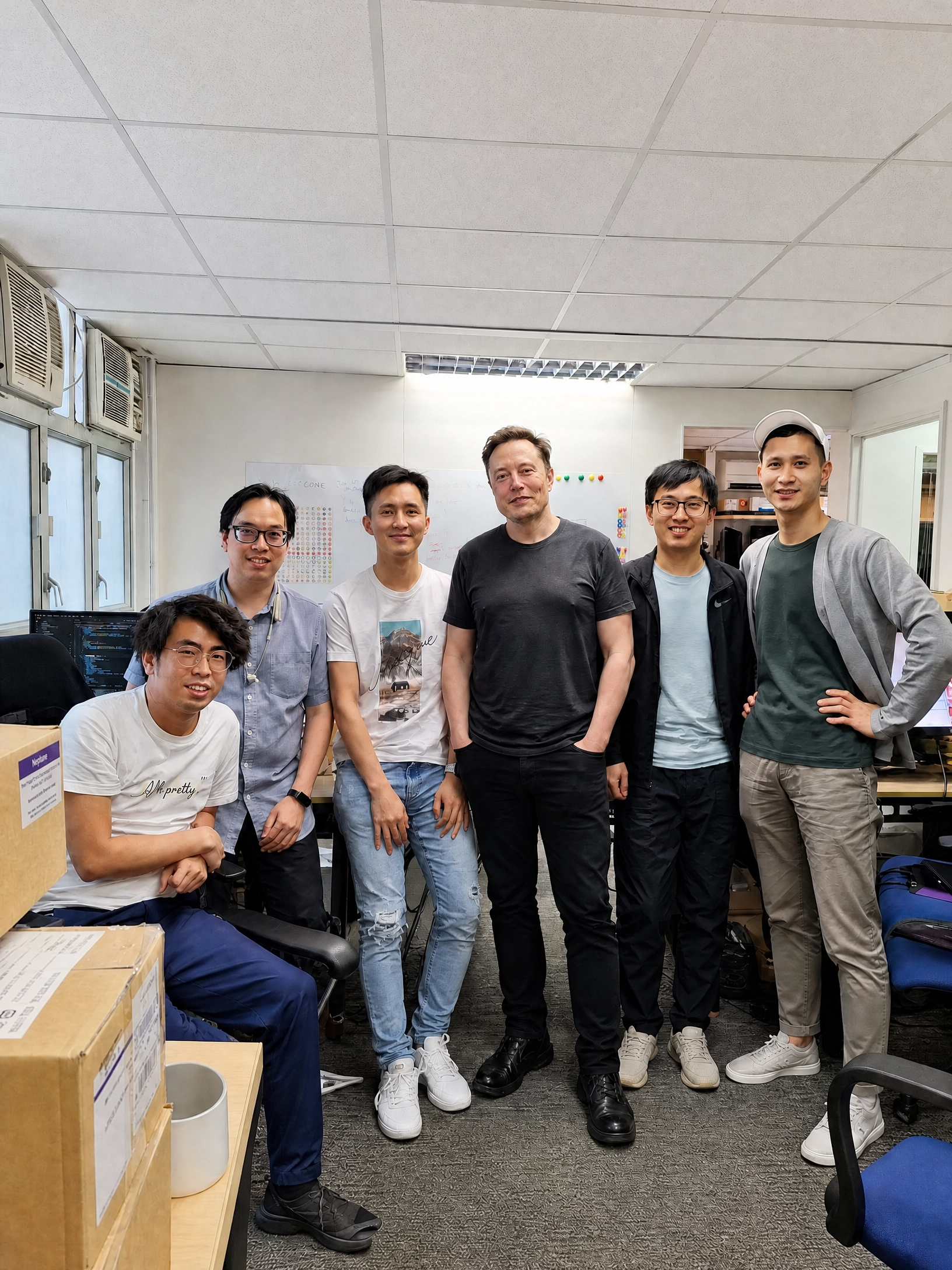
Our team meeting with Elon to discuss AI-powered building management (just kidding — this image is AI-generated, but our excitement for AI agents is very real!).
Why AI Agents?
Traditional IoT platforms rely on rule-based automation: if temperature exceeds X, then do Y. While effective, this approach requires constant manual configuration and cannot adapt to changing conditions autonomously.
AI agents change the game by:
- Learning from Data: Agents analyze historical patterns to predict issues before they occur
- Autonomous Decision-Making: Complex multi-step workflows execute without human intervention
- Continuous Improvement: Agents refine their strategies based on outcomes and feedback
- Natural Language Interaction: Operators can describe what they want in plain English
What's Changing
Intelligent Anomaly Detection
Instead of static thresholds, AI agents will continuously monitor sensor data streams and detect anomalies based on learned patterns. A sudden spike in energy consumption at 3 AM? The agent knows it's unusual for that building and alerts the right team.
Predictive Maintenance
AI agents will analyze device telemetry to predict equipment failures before they happen. This shifts maintenance from reactive (fix when broken) to proactive (fix before it breaks), reducing downtime and costs.
Automated Rule Generation
Describe your automation goal in natural language, and the AI agent will generate the corresponding rule configuration:
"When occupancy in Conference Room A drops below 2 people for more than 10 minutes, turn off the lights and reduce HVAC to eco mode."
The agent translates this into SEER's rule engine format automatically.
Context-Aware Automation
AI agents understand building context—time of day, occupancy patterns, weather conditions, and business calendars. This enables smarter automation that adapts to real-world scenarios rather than following rigid schedules.
The Technical Foundation
Our AI agent architecture builds on SEER's existing strengths:
- Event-Driven Pipeline: All sensor data flows through our event bus, which agents subscribe to for real-time analysis
- Tenant Isolation: Each workspace's data remains isolated, ensuring privacy and compliance
- Extensible Agent Framework: Custom agents can be developed and deployed for specific use cases
- Audit Trail: Every agent action is logged with full reasoning, maintaining transparency and accountability
Getting Started with AI Agents
The first wave of AI agent capabilities will be available in Q3 2026:
- Energy Optimization Agent: Automatically adjusts HVAC and lighting based on occupancy predictions
- Anomaly Detection Agent: Monitors sensor streams for unusual patterns and alerts operators
- Scheduling Agent: Manages recurring bookings and suggests optimal resource allocation
To prepare for the AI agent rollout:
- Ensure your device telemetry is flowing to SEER's data pipeline
- Review and update your workspace configurations
- Join our beta program to get early access
What's Next
We're committed to making SEER the most intelligent building management platform available. Our roadmap includes:
- Multi-Agent Collaboration: Agents that work together to optimize building-wide systems
- Federated Learning: Agents that learn across buildings while preserving data privacy
- Voice-Activated Control: Natural language commands for building operations
- Digital Twin Integration: AI agents that simulate and predict building behavior
The future of smart buildings is autonomous, intelligent, and adaptive. We're thrilled to lead this transformation with our AI agent initiative.
Stay tuned for more updates as we roll out these capabilities in the coming months.